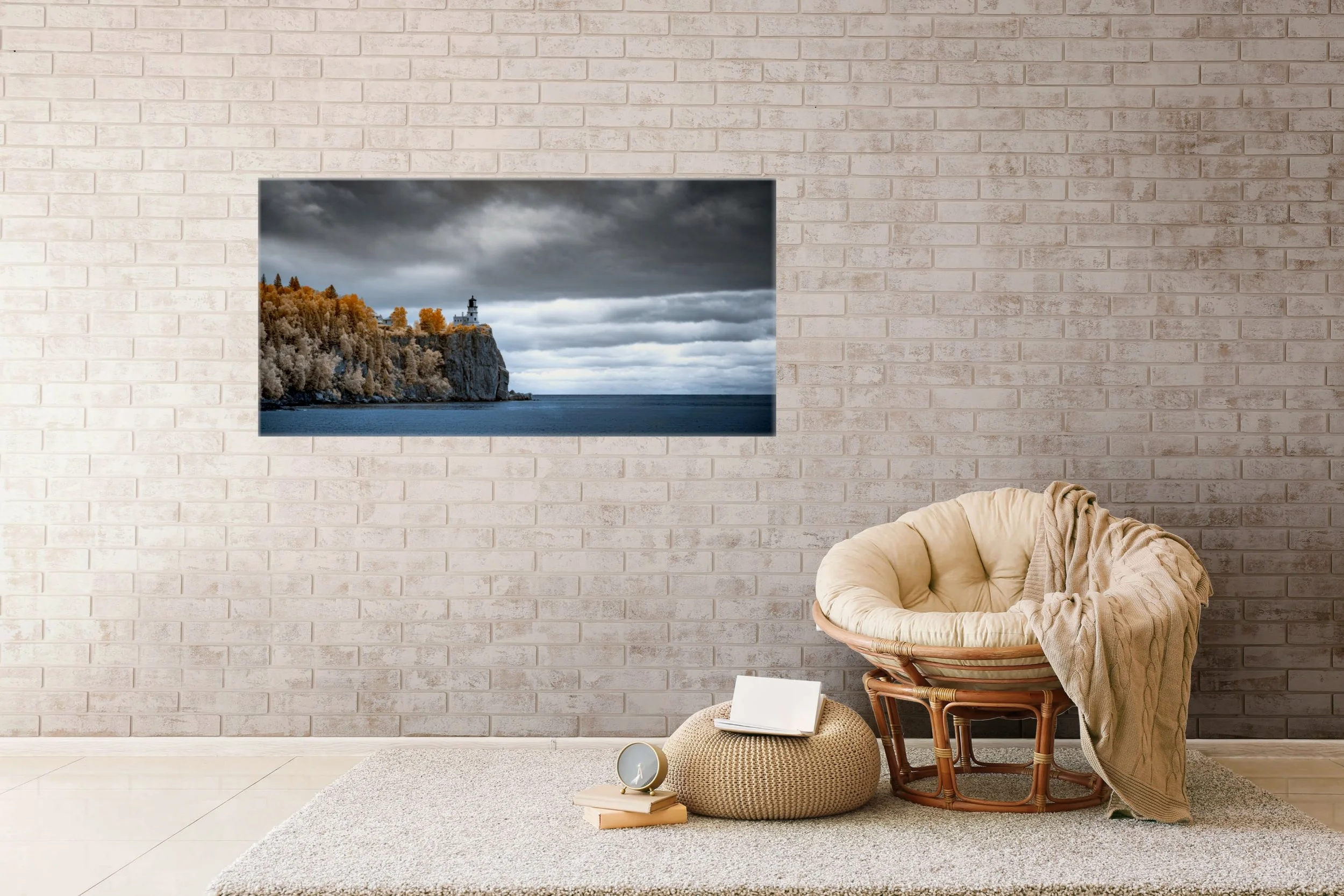
The Collector’s Guide: How to Choose the Right Size Artwork for Your Space
Scale is quiet, but it changes everything. The same photograph, printed small, asks you to lean in and look closely—a private moment between you and the image. Printed large, that same photograph opens like a doorway, and the room seems to fall away around it.
Choosing the right dimensions for your space is about deciding how present you want the artwork to be in your daily life, then finding the size that carries that feeling honestly.
Begin With the Photograph
Before measuring the wall, sit with the photograph itself. A misty forest filled with quiet details may reward a smaller size—one that draws you closer to see what is hidden within the shadows. A sweeping infrared landscape, luminous and open, may call for room to breathe, large enough that its horizon becomes your horizon, if only for a moment.
Think about how you want the room to feel. Should the photograph anchor the space and become the first thing a visitor notices? Or should it live more intimately in a hallway, reading nook, or quiet corner of a bedroom?
That answer can shape your choice more meaningfully than a formula alone.
Measure the Space
Begin with three simple measurements:
• The width and height of the available wall
• The width of any furniture beneath or near the artwork
• The distance from which you will usually view it
These numbers will not make the decision for you, but they will ground your instincts in the room itself.
Throughout the comparison images in this guide, dimensions are shown as height × width, in inches.
Consider the Furniture Beneath It
When artwork hangs above a sofa, bed, console, or fireplace mantel, it often feels balanced when it occupies approximately two-thirds to three-quarters of the furniture’s width.
Treat that as a starting point rather than an unbreakable rule. A narrow vertical photograph can sit beautifully above wider furniture when the surrounding negative space feels intentional. A panoramic landscape may stretch closer to the furniture’s full width so the scene has enough room to unfold.
Small, Medium, and Large: Three Different Experiences
Small artwork creates intimacy. It invites you to step closer and notice delicate changes in texture, atmosphere, and light. A smaller piece can work beautifully in a hallway, reading nook, or personal space where it can be encountered at close range.
Medium artwork becomes part of the room’s natural rhythm. It has a clear presence without dominating the space, making it a versatile choice above a desk, console, or smaller piece of furniture.
Large artwork creates immersion. At scale, a landscape becomes more than something you look at—it becomes something you can almost enter. A larger photograph often works best when it has open wall space and enough viewing distance for the full composition to be experienced.
How Shape Changes the Space
The shape of a photograph matters as much as its overall size. Its proportions determine how it moves across the wall and how comfortably it relates to the architecture and furniture around it.
3:1 Panoramic Artwork
A 3:1 panorama is long and narrow. It works naturally above a sofa, bed, dining table, or console where there is ample horizontal space. Its extended shape allows the eye to travel slowly across the landscape.
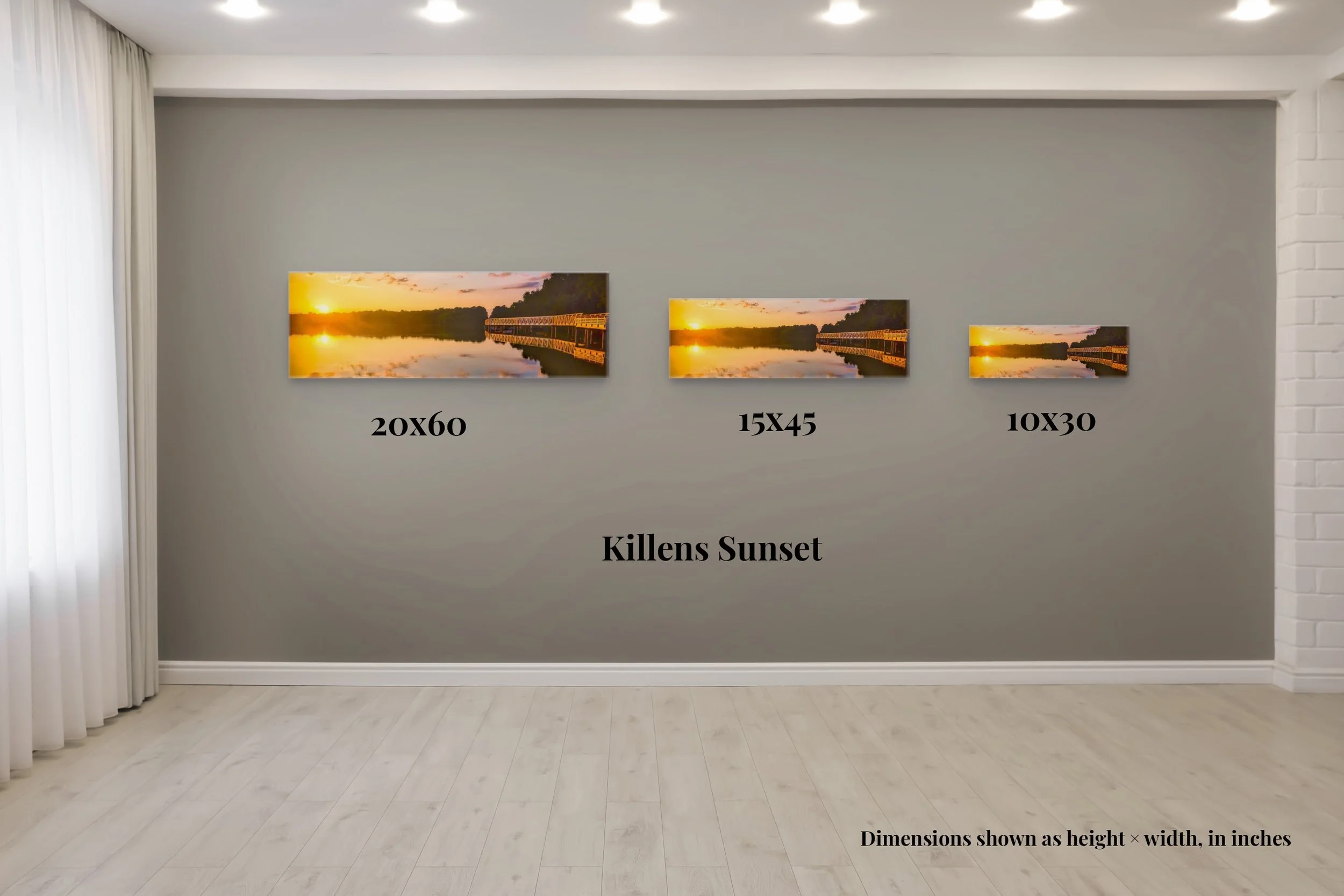
A panoramic photograph needs enough width to unfold, allowing the eye to travel through the full landscape.
2:1 Horizontal Artwork
A 2:1 photograph still has a panoramic feeling, but its additional height gives the landscape greater presence. It can span wider furniture while carrying more visual weight than a narrower panorama.
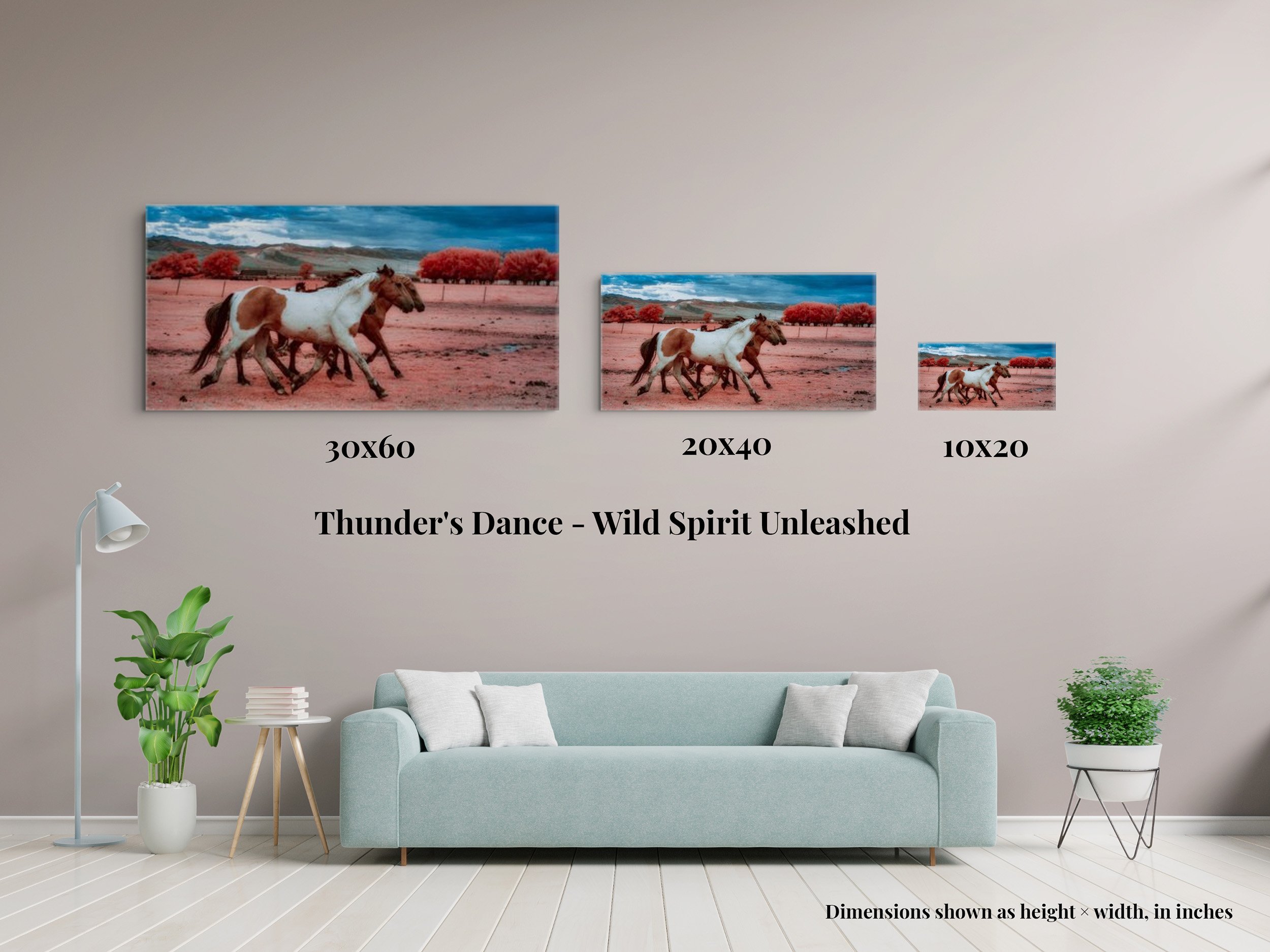
A 2:1 format combines generous width with enough height to give the landscape a strong presence.
3:2 Horizontal Artwork
The classic 3:2 horizontal format feels natural in many rooms. Its familiar proportions offer a balance of width and height that works well above furniture or on an open wall.
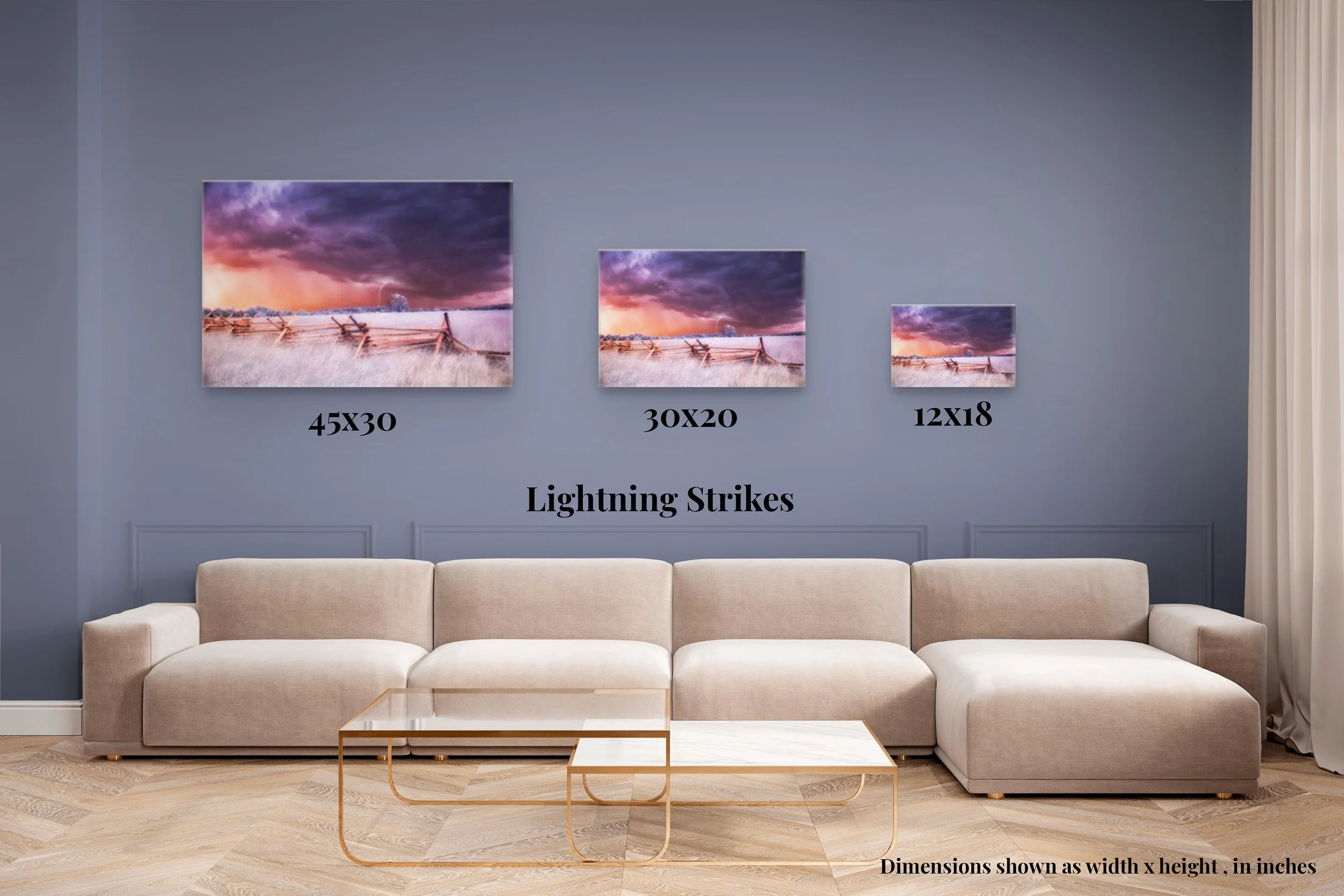
The balanced proportions of a 3:2 photograph make it comfortable in many rooms and at a wide range of sizes.
4:3 Horizontal Artwork
A 4:3 photograph has a slightly fuller, less elongated shape. It gives the subject more height and can feel substantial without requiring an especially wide wall.
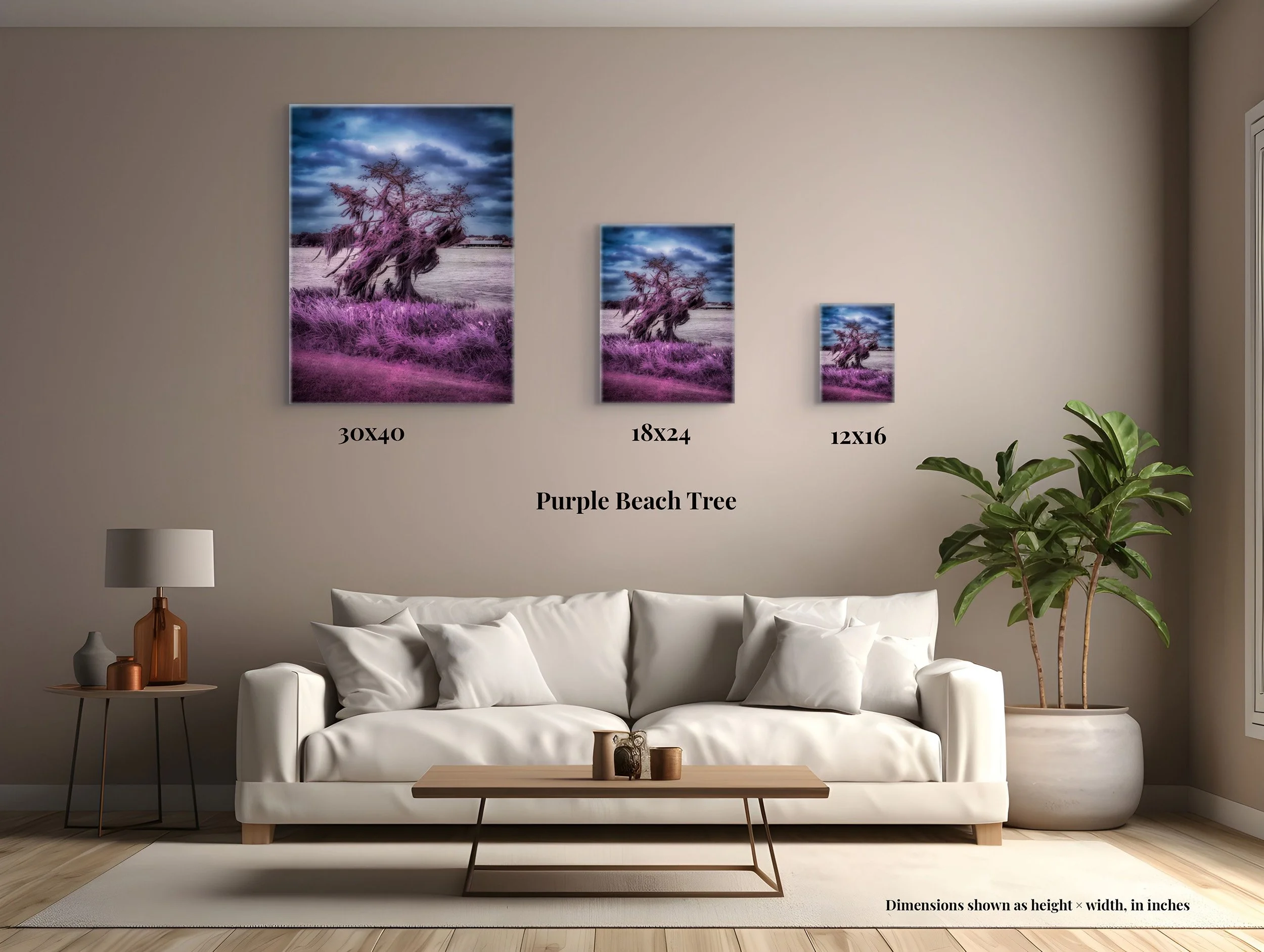
A 4:3 format has a fuller presence, making it a natural choice when the available wall is not especially wide.
Square Artwork
A square photograph feels grounded and self-contained. It can hold its own on a narrower wall while also working beautifully above a console, chair, or other compact area.
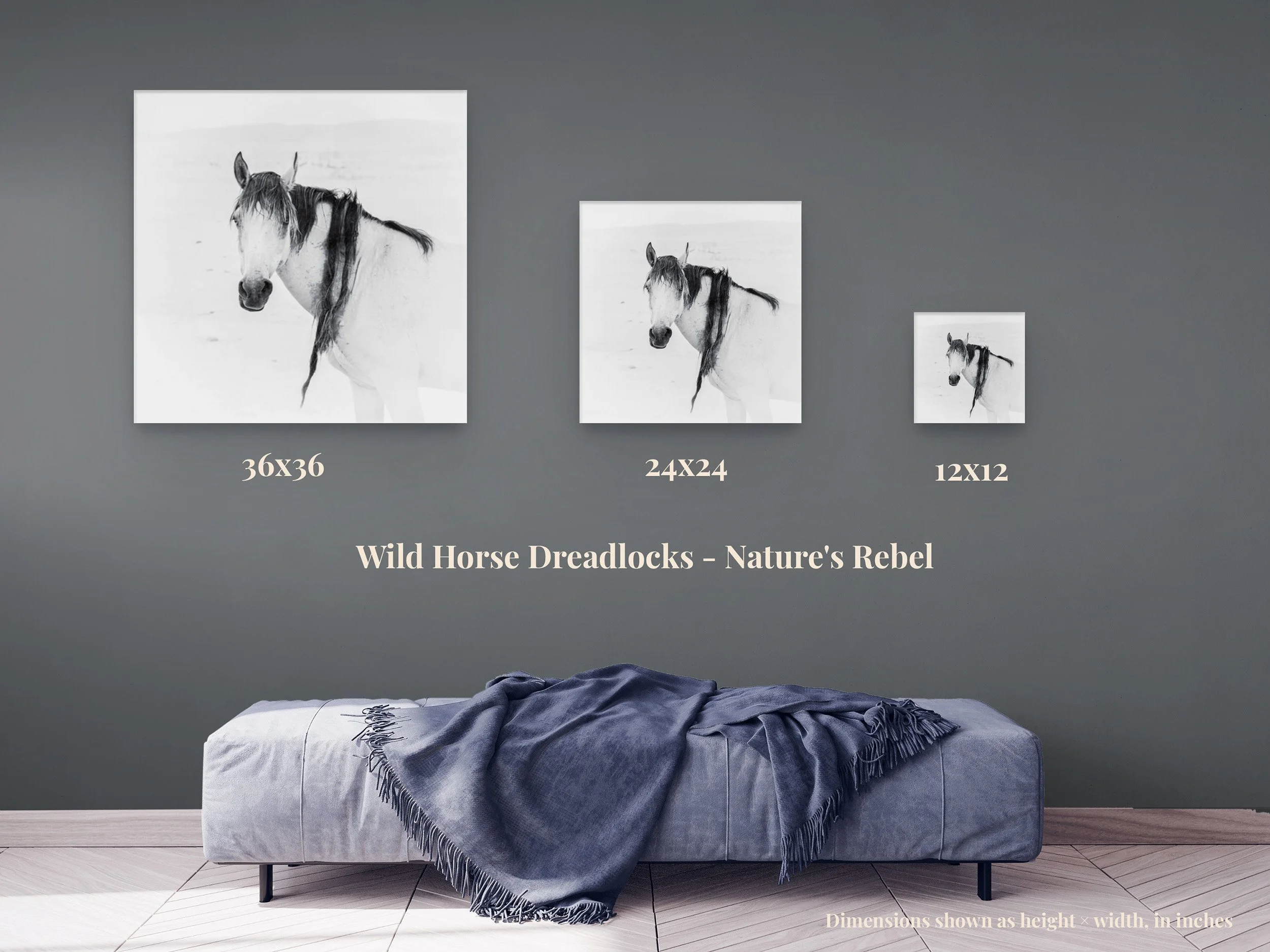
A square format feels steady and centered, creating presence without requiring extensive horizontal space.
Vertical Artwork
A vertical photograph draws the eye upward. It is especially well suited to narrow walls, spaces between windows, the end of a hallway, or areas beside architectural features.
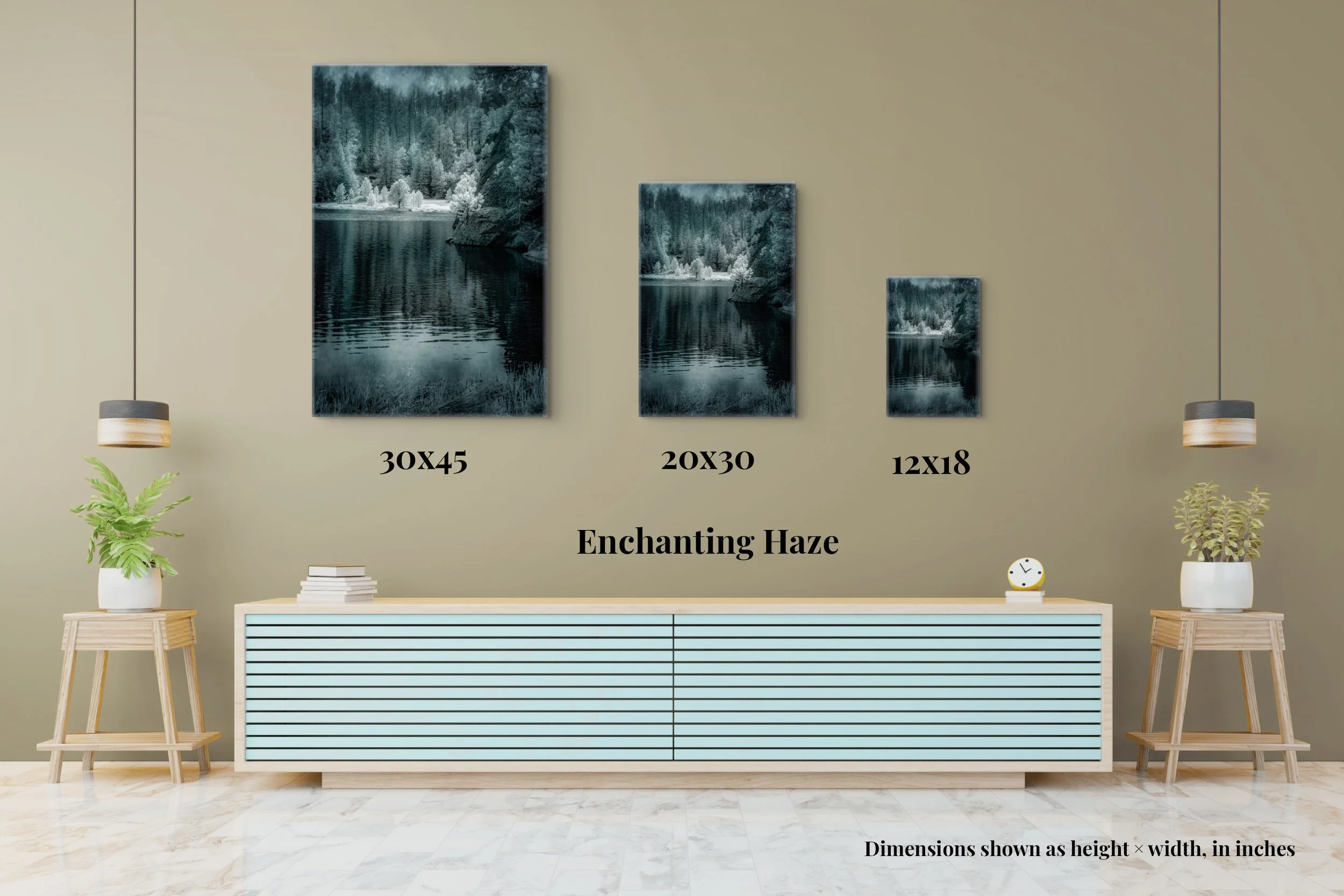
A vertical format brings height to a room and fits naturally within narrower spaces.
Remember the Finished Dimensions
Consider how the listed artwork dimensions translate to what will actually hang on your wall.
For metal, canvas, acrylic, and wood presentations, the listed artwork dimensions generally represent the finished visible size. Framed fine-art paper and deckled-edge presentations become larger because the mat and frame extend beyond the printed image.
When measuring your space, make sure you know whether the listed dimensions refer to the photograph itself or the complete framed presentation.
Preview the Size on Your Wall
There is no need to imagine the dimensions in the abstract. Use painter’s tape to mark the exact height and width directly on the wall. Leave the outline in place for a day or two and notice how it feels as you enter the room, sit down, or pass it during your normal routine.
For a more complete preview, ArtPlacer can place the artwork onto a photograph of your own wall at an accurately scaled size. This can make it easier to compare several dimensions before deciding which feels most natural.
Leave Room for the Artwork to Breathe
Artwork does not need to fill every available inch of a wall. Negative space is part of the experience, just as it is part of the photograph’s composition.
The goal is to give the piece enough presence to feel intentional while leaving enough room for the image—and the room around it—to breathe.
Trust the response you have to the photograph. Measurements are there to support that instinct, not replace it.
Finding the Right Scale for Your Space
If you would like a second set of eyes, I am happy to help you consider the size of a particular photograph for your space. Send me a photograph of the wall, its approximate measurements, and the artwork you are considering, and we can explore the possibilities together.
Choosing the material is another part of finding the right presence for an artwork. Continue with the first article in this series, Which Print Material Fits Your Space?
Still discovering what kind of artwork feels most at home with you? Find Your Style offers a quiet place to begin, helping you explore the scenes, colors, and atmosphere that speak to you.