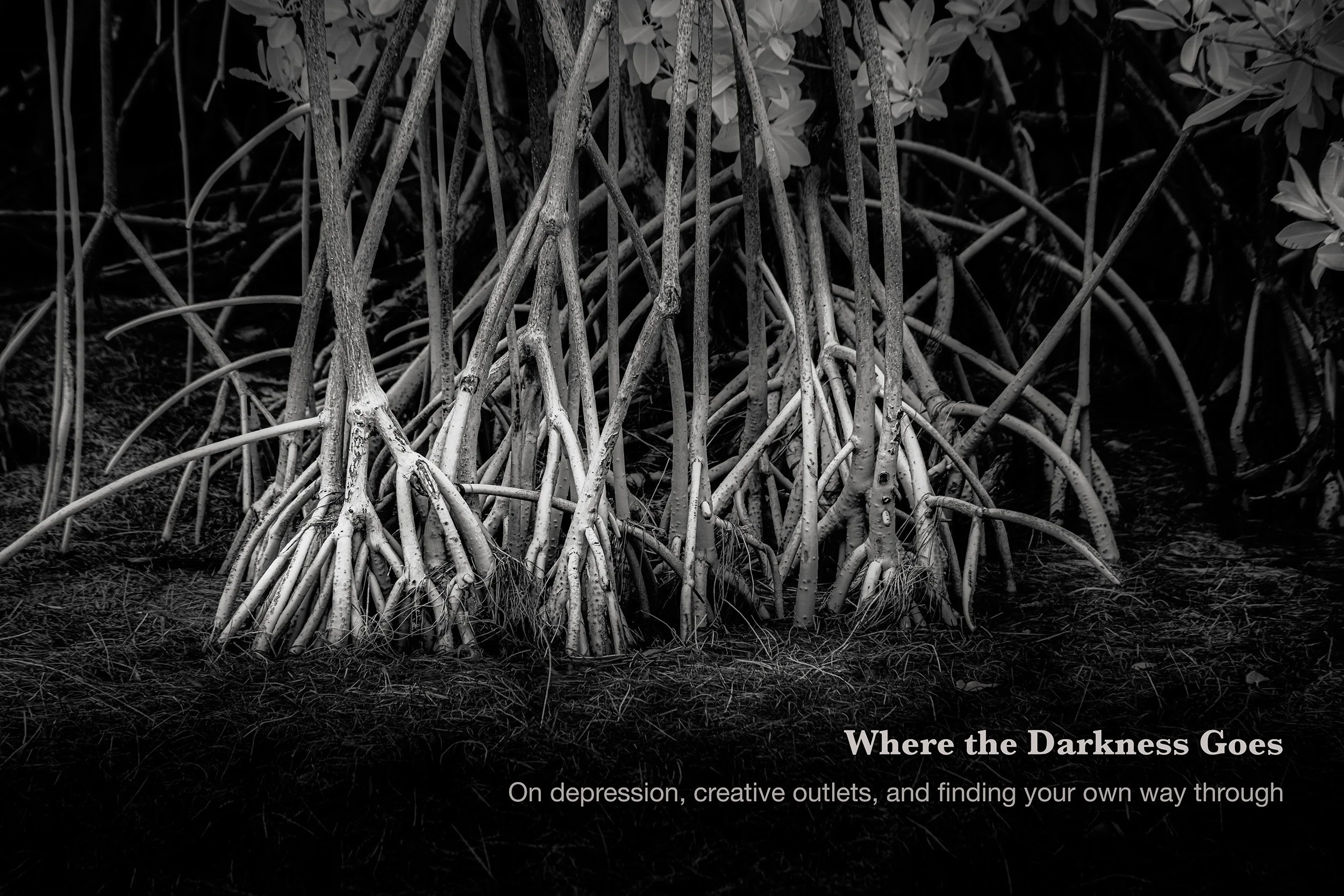
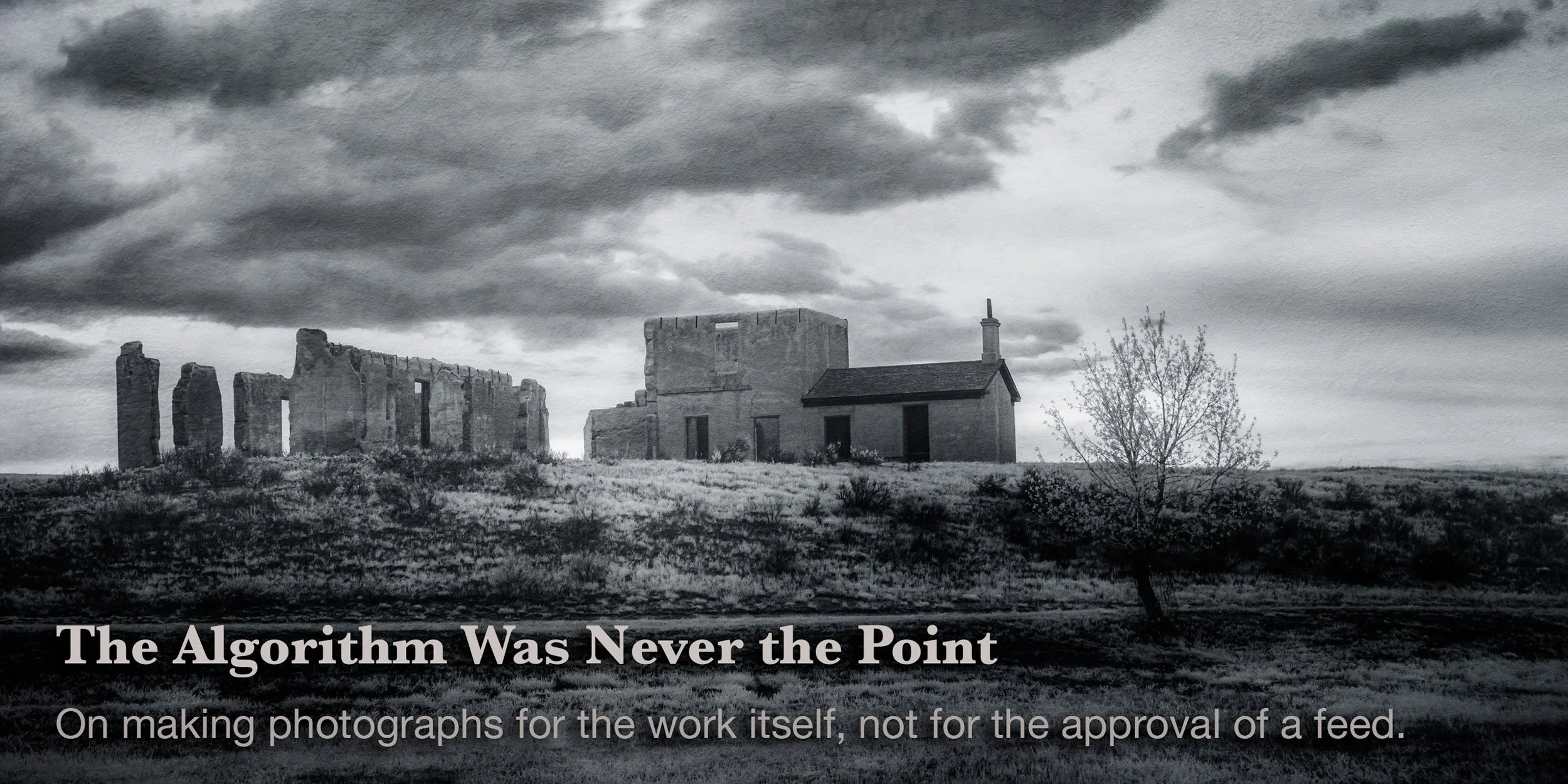
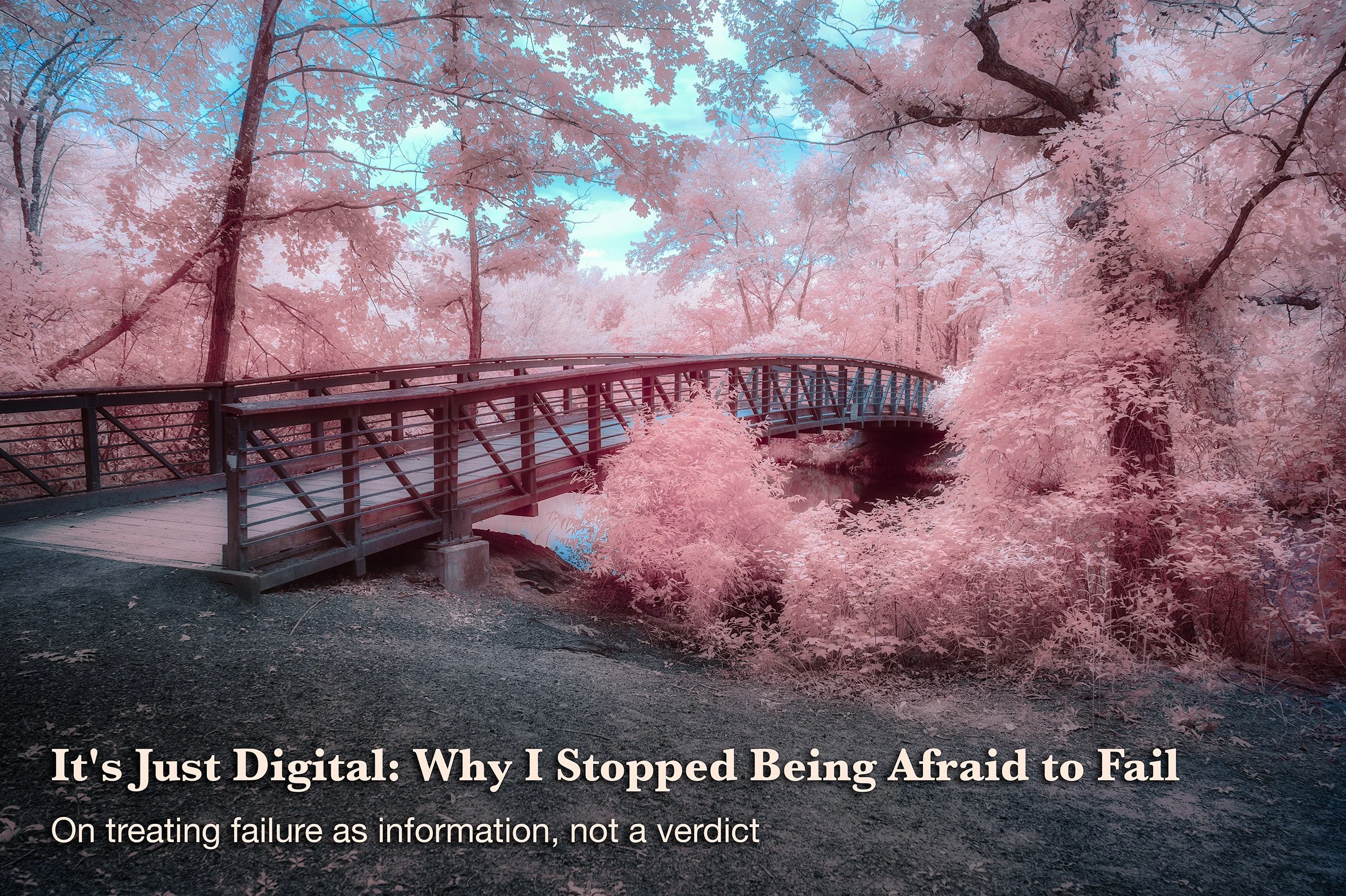
Where the Darkness Goes
I've watched a lot of videos over the years about photographers who say the camera saved their life. Someone finds it in their sixties after retirement, or picks it up during a hard chapter, and it becomes the thing that carried them through. Those stories are usually told the same way — inspirational, a little vague, wrapped up neatly by the end. Photography healed me. It gave me purpose.
I don't think mine is quite that story. It's a little messier, and honestly, a little more useful, because it's specific.
I've dealt with depression for as long as I can remember. Not the dramatic kind you see depicted in movies — the quiet kind that just sits in the background of an otherwise normal life, showing up in low moments, low confidence, a persistent sense that you're not quite enough, even when the evidence in front of you says otherwise. I didn't find photography as a cure for that. I found it as a place to put it.
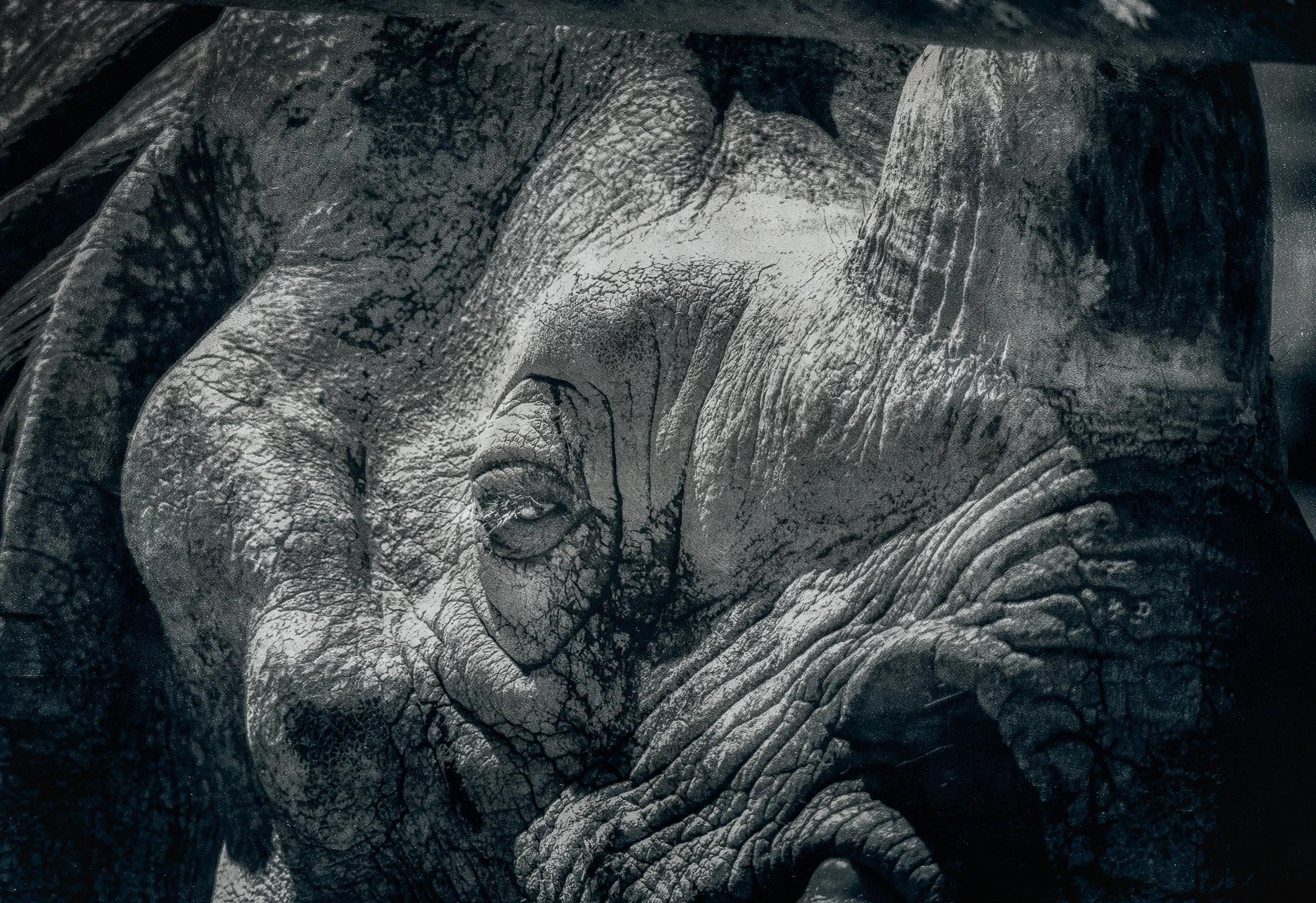
What the Old Ones Remember
There's a rhino I photographed once, close enough to see every crack and fold in his hide, close enough to see his eye. What the Old Ones Remember isn't a title I chose to be dramatic — it's just what I saw looking back at me. He looked tired in a way that had nothing to do with the moment. Not startled, not aggressive, not any of the things you'd expect from an animal that size. Just quiet. Heavy. Like he was carrying something old that had never fully put itself down.
Honestly, he looks like how I feel most of the time inside.
I don't know what a rhino actually feels, and I'm not going to pretend I do. But I know what I recognized in that eye when I looked through the lens, and I know why I stopped everything else I was doing to make sure I captured it. Some images find you because they're showing you something out there. This one found me because it was showing me something already in here.
That distinction matters to me. A cure implies the thing goes away. What actually happened is closer to translation — I found a way to take what was heavy and internal and turn it into something external, something I could look at, shape, and set down outside of myself for a while. When I'm behind the camera, or later, alone with an image in Lightroom, something in me exhales. It's not that the depression disappears. It's that it finally has somewhere to go.
I think that's part of why my work leans as dark and moody as it does. The heavy skies, the deep contrast, the images that read as fragile or even a little like loss — two leaves clinging together on wet pavement, a lone tree standing apart from everything around it. I'm not chasing pretty. I never really have been. I'm chasing something closer to true, and the truth, for me, has often been dark. Making an image like that isn't me wallowing in it. It's me getting it out of my head and onto a screen, where it can exist without me having to carry it alone anymore.
I want to be honest about something else, too, because I think it matters for anyone reading this who's been told there's only one right way to deal with what they're carrying: talking has never done much for me. I've tried traditional therapy, and it just wasn't the outlet I needed — I don't process well through conversation. That doesn't make talking wrong, and it doesn't make it wrong for you if it works for you. It just means I had to find my own channel, and mine turned out to be a camera and a quiet trail and hours alone with an image, not a couch and a conversation.
If there's a takeaway here, it's this: however you're wired, there's probably a version of this available to you. Some outlet, some form of making something, that lets whatever you're carrying move from inside you to somewhere outside you, where it takes up a little less room. For me it was infrared photography, almost by accident. It might be something else entirely for you. But I don't think you have to talk your way out of the dark to survive it. Sometimes you can just make something with it instead.
I've been doing this for over two decades now, and I still don't always know what I'm going to feel like when I pick up the camera. Some days it's genuine joy. Some days it's something closer to a release valve. Both are real. Both are worth showing up for.

Golden Hour Symphony
Then there are days like the one that gave me Golden Hour Symphony — a field, a line of trees, the sun dropping low enough to set the whole scene glowing. No heaviness in this one. No wrestling with anything. Just light doing exactly what light does at the end of a good day, and me standing there lucky enough to have a camera in my hands when it happened.
Days like that remind me the camera isn't only for carrying the hard stuff. Sometimes it's simply there to catch the good, ordinary, golden moments too — and both reasons are enough to keep showing up.
That's where the darkness goes, for me. Into the work. Into the frame. Somewhere I can look at it, instead of just carrying it.
If anything in this piece hit close to home — if you're dealing with depression or a hard stretch of your own — please know that support exists even if therapy specifically hasn't been the right fit for you before. You don't have to figure out your own outlet alone.
Explore Realm of Dreams at Dream World Images, or read the rest of the Dreamer's Journal.