I Don't Pre-Visualize. I Just See It.
Ansel Adams called it "pre-visualization" — the idea that a photographer sees the finished image in their mind before they ever press the shutter, then works backward from that vision to capture and process the shot. It's one of the most quoted ideas in photography, and for good reason. It's a genuinely useful way to think about the craft.
It's also not how I work. Not exactly.

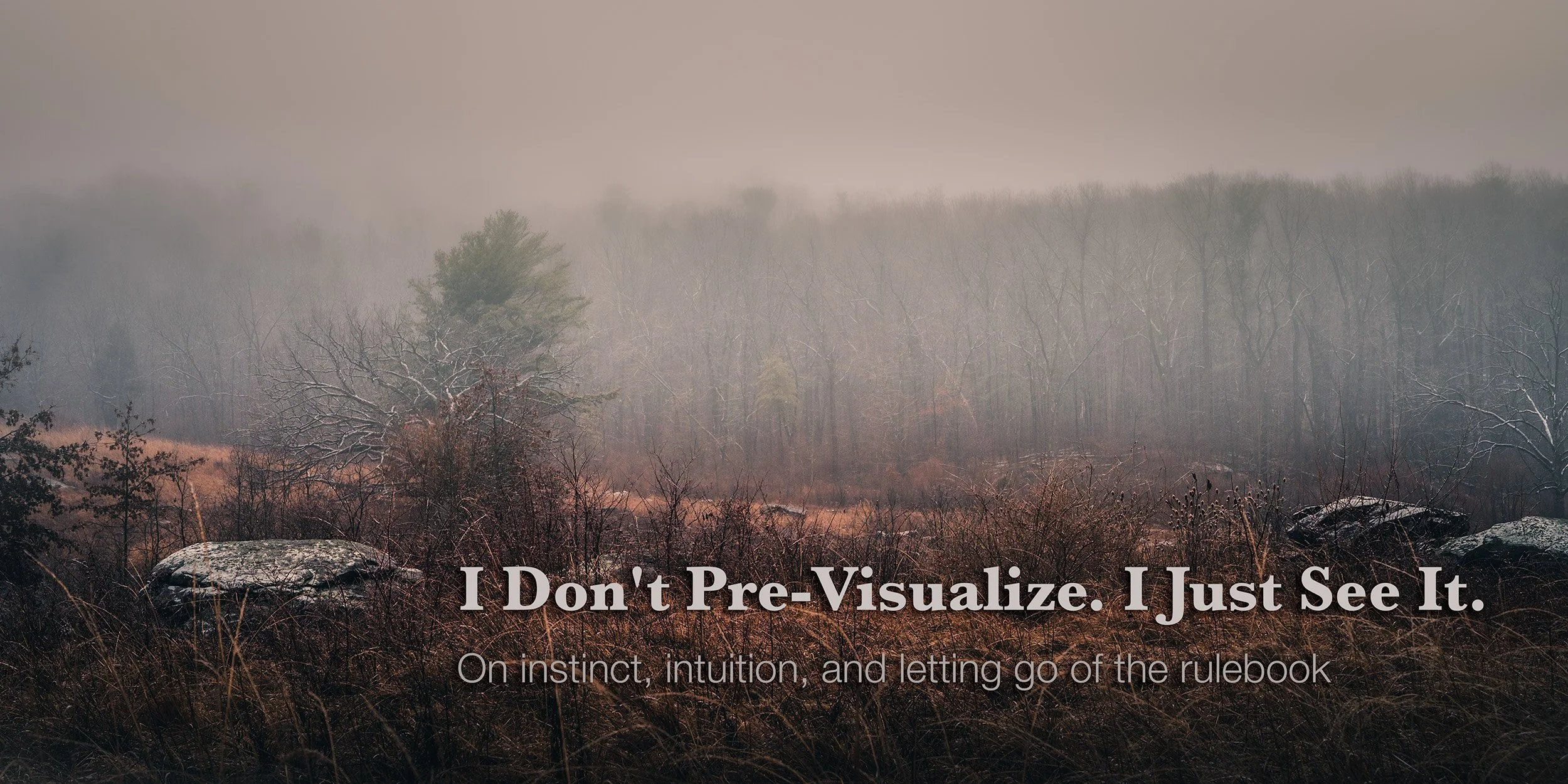
Solitude Unveiled: A Dogs Day Out in Gulf Shores Alabama
This image is called - Solitude Unveiled: A Dogs Day Out in Gulf Shores Alabama. I'm putting it in post 2, i shot this one while at the dog park. i just saw the tree. the only thing i did was wait a second for a dog to leave the frame... i need a short info section that ties this into the post....
There's a lone tree at a dog park in Gulf Shores, Alabama — not exactly a scene most people would call sacred ground. I wasn't there to make art. I was there because Cooper needed to run. But I saw this tree the second I looked up, and I knew almost instantly it was the shot: that high-contrast infrared glow against a black sky, the shoreline behind it, the whole thing already composed before I'd even lifted the camera. The only thing left to do was wait a beat for a dog to clear the frame.
That's the whole process, honestly. No scouting trip, no pre-visualized plan, no checklist run through in my head. I looked up, I saw it, and I knew. Solitude Unveiled wasn't found on a dedicated shoot — it was found in the two minutes between throwing a ball and Cooper getting distracted by something more interesting in the grass. That's usually how it happens. The image doesn't wait for the right conditions. It just shows up, and you either see it or you don't.
For me, there's very little "thinking" involved at all. I don't stand in front of a scene running through a mental checklist — rule of thirds, leading lines, where's my foreground interest, what's my focal point. I just look at something and, almost instantly, I know. I might feel a pull to move three feet to the left, or drop the camera lower, or wait for a cloud to shift. But that's not deliberation. It's closer to a reflex than a decision. The image is already mostly finished in my head before I've consciously registered why.
I've watched a lot of photography YouTube over the years — tutorials breaking down exactly what to look for in a scene, step by step, rule by rule. And every time, I come away a little confused, because that's just not how it happens for me. It's not analytical. It's not built up piece by piece. It just arrives.
I genuinely don't know if that's a gift or a curse. Some days it feels like a gift — I can walk into a scene most people would pass right by and see something worth stopping for in seconds. Other days it feels like a curse, because I can't always explain why an image works, which makes it hard to teach, hard to repeat on command, and honestly, hard to trust sometimes when the doubt creeps in.
Here's what I want anyone reading this to take from it, though — especially if you've ever sat through one of those tutorials feeling like you're doing it wrong because you don't consciously "see" the way the person on screen describes: there is no one correct way to see. Some photographers build their vision step by step, consciously, deliberately, and that works beautifully for them. Others — and I'm one of them — just see it, whole, all at once, without being able to fully explain the process even to themselves.
Neither way is more legitimate than the other. The checklist isn't required. If you've been trying to force your eye to work like someone else's tutorial says it should, and it's never quite clicked, maybe the problem was never you. Maybe you just see differently — and that's worth trusting, not fixing.
Learn your gear. Learn what your settings actually do. Then let your eye do whatever it's going to do. Mine doesn't ask permission. I've stopped expecting it to.

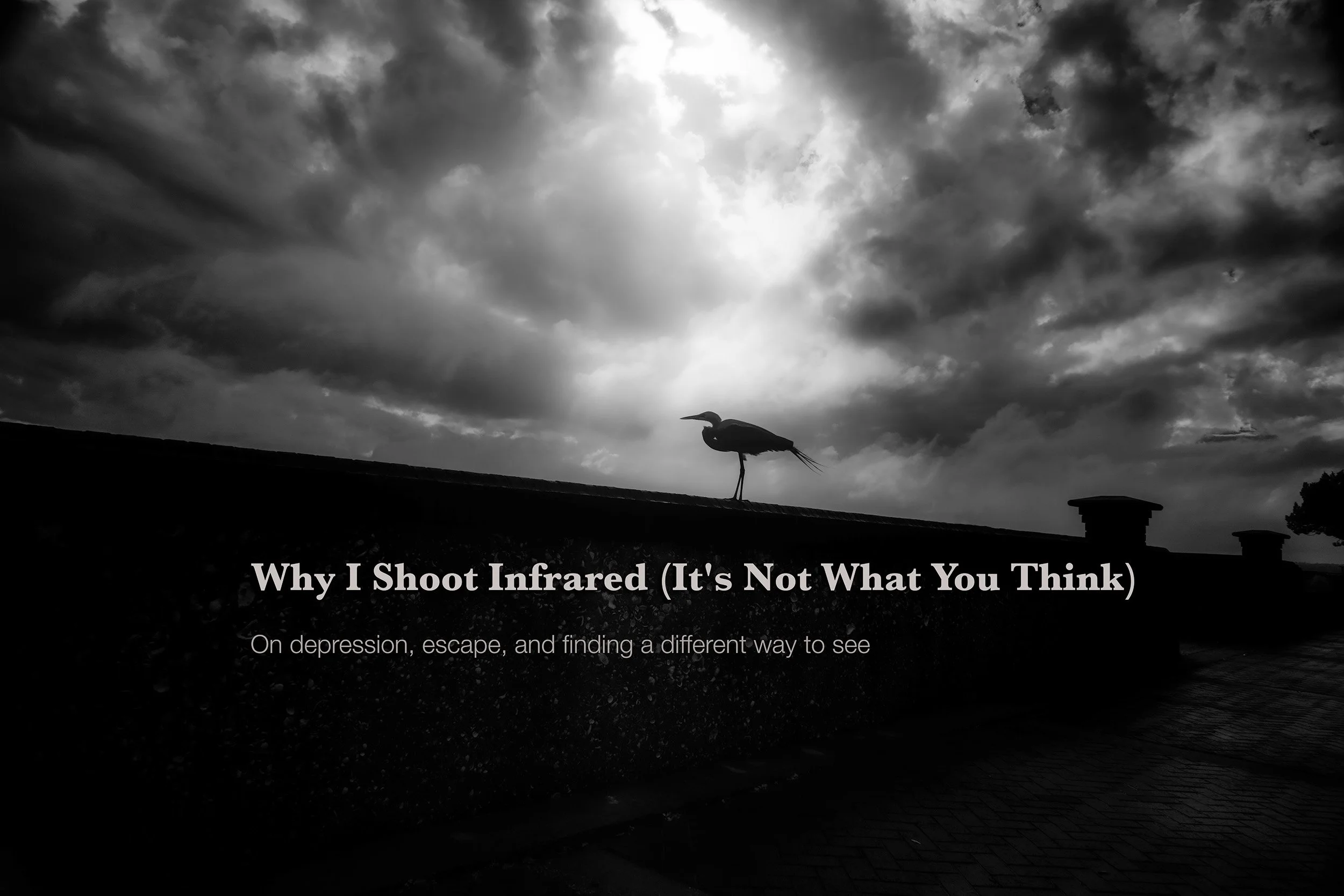
Storm's Dance
Storm's Dance is proof that "knowing your gear" isn't just a nice idea — sometimes it's the only thing standing between you and a blank memory card. Lightning was closing in fast, close enough that staying on that dock wasn't an option anymore. I was already running, camera in one hand, tripod in the other, when I stopped for half a second, crouched, and fired off a shot backward — without even looking through the frame.
I didn't compose this image. Not in any conscious sense. I knew my camera. I knew what lens was mounted. I trusted my hand-eye coordination to point roughly where it needed to point, and I pulled the trigger on instinct alone. No pre-visualization, no checking the screen, no time to think at all. Just years of knowing my gear well enough that my body could make the decision faster than my mind could catch up. That's the whole point of learning your equipment cold — not so you can follow a process, but so that when there's no time for process at all, you can still walk away with something real.
Read more reflections on creativity and vision in the Dreamer's Journal, or explore the infrared collection at Dream World Images.