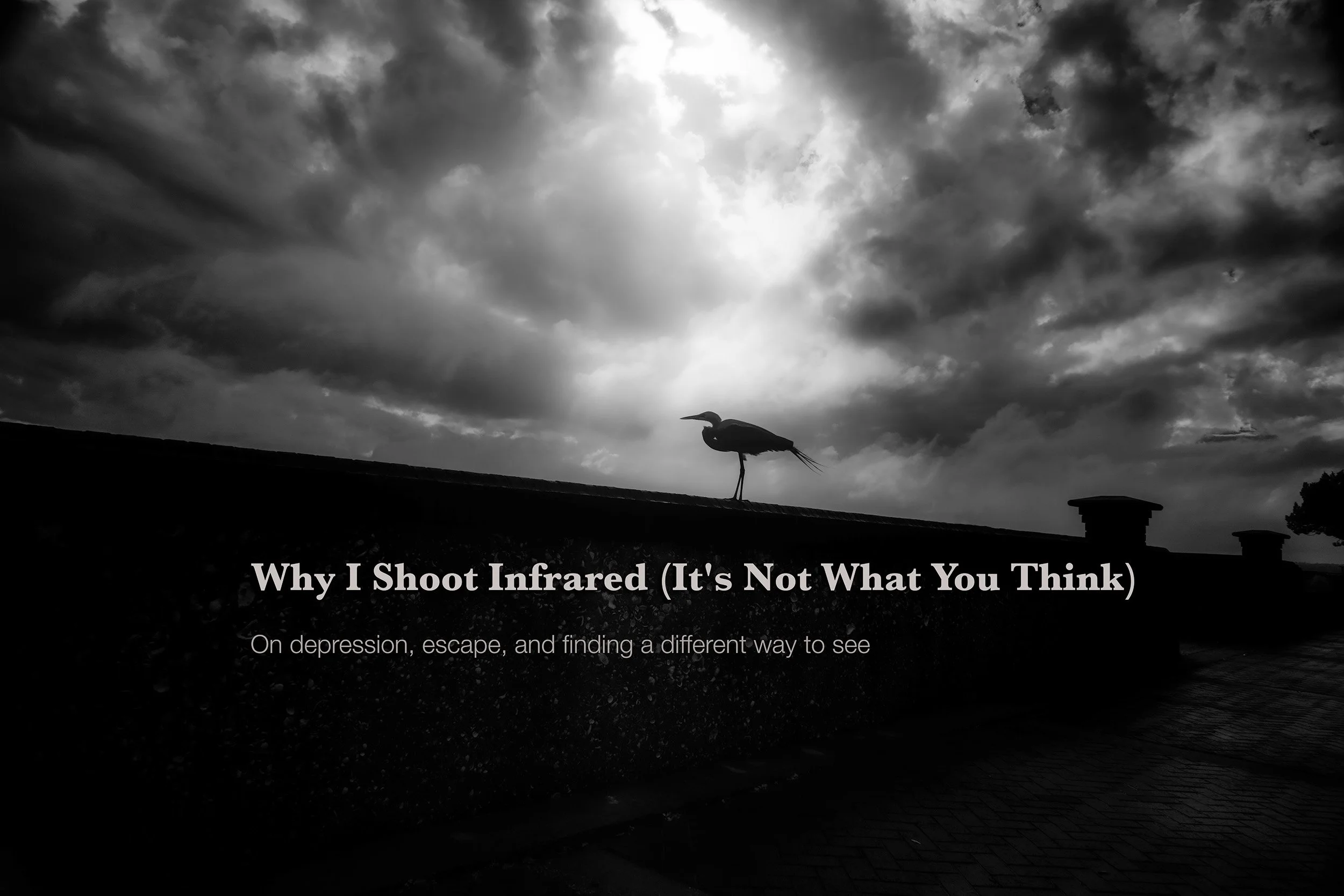
Why I Shoot Infrared (It's Not What You Think)
There's a question I get more than almost any other: why infrared? Most people expect a technical answer — something about wavelengths, filters, sensor conversions. And I can give that answer. But it's not the real one.
The real answer is that infrared photography gave me somewhere to put what I couldn't say out loud.
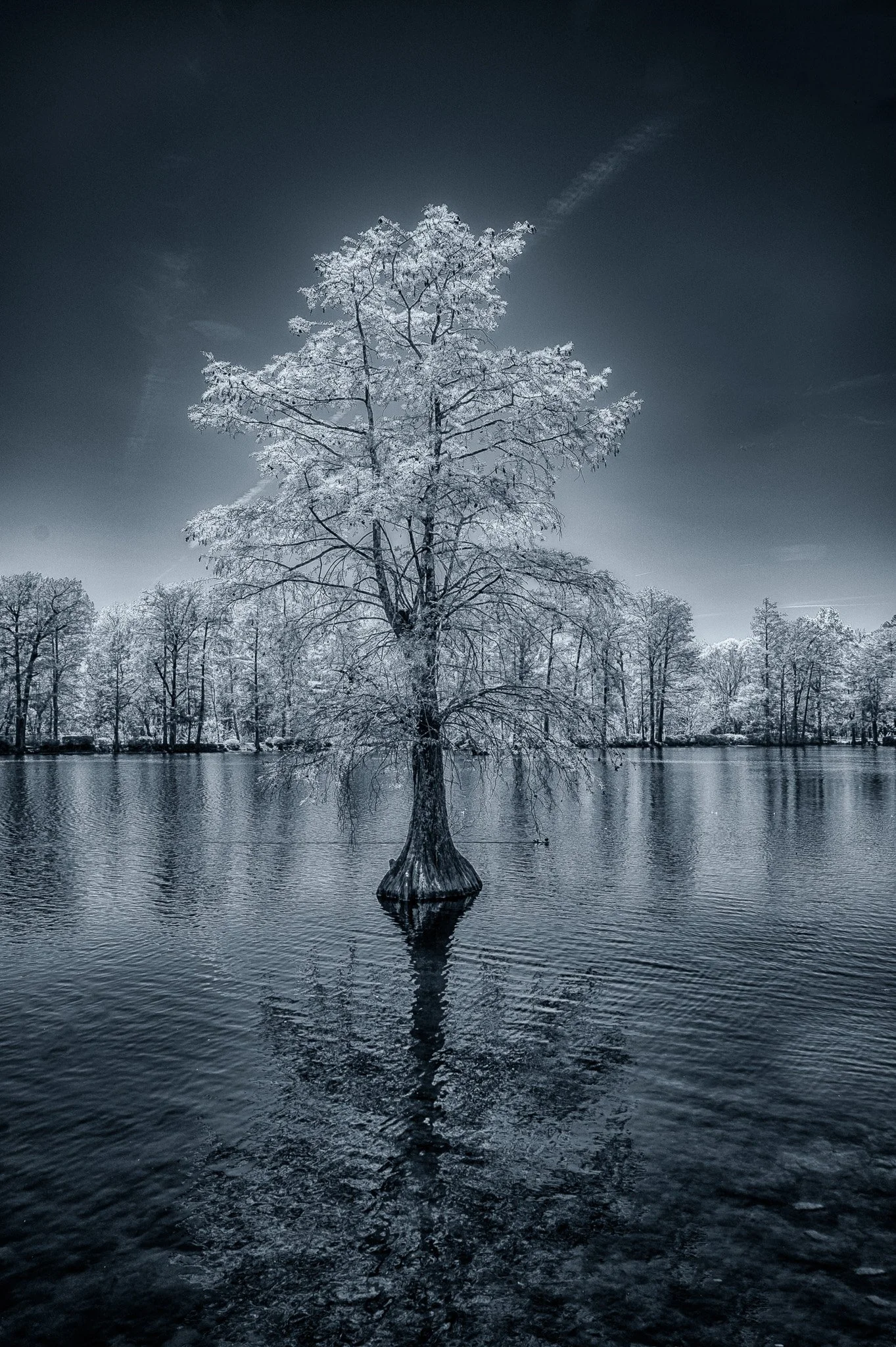
Lone Sentinel
There's a tree that keeps showing up in my work — not one tree, exactly, but a recurring subject: a lone tree, standing apart from the rest. Sometimes it's a solitary cypress rising out of still swamp water, its reflection nearly as solid as the tree itself. Sometimes it's a single tree alone in an open field, or the one holding back from a distant grove. Different places, different light, same quiet pull.
I didn't plan for it to become a pattern. But looking back through years of images, I think that's part of what I mean by infrared giving me somewhere to put what I couldn't say out loud. These trees aren't struggling. They're not caught mid-storm or fighting for survival. They're just standing — steady, solitary, undramatic about being alone. Some days, that's exactly the image I need to make. Not the crisis. Not the collapse. Just proof that something can stand apart from everything else and still hold its shape.
I've dealt with depression and a serious lack of self-confidence for as long as I can remember. Not the kind you talk about at dinner parties. The kind that just sits there, quietly, in the background of an otherwise normal life. For a long time, I didn't have a name for what photography was doing for me — I just knew that when I was behind the camera, or later, alone in front of a screen processing an image, something in me finally exhaled.
It wasn't until years into this work that I understood why infrared specifically pulled me in, more than visible light ever did. Visible light photography — even when it's beautiful, even when it's technically perfect — still tethers you to what is. The grass is green because grass is green. The sky is blue because that's simply the fact of the sky. There's a kind of honesty in that, but for someone whose inner world doesn't always match the outer one, it can also feel like a wall.
Infrared takes the wall down.
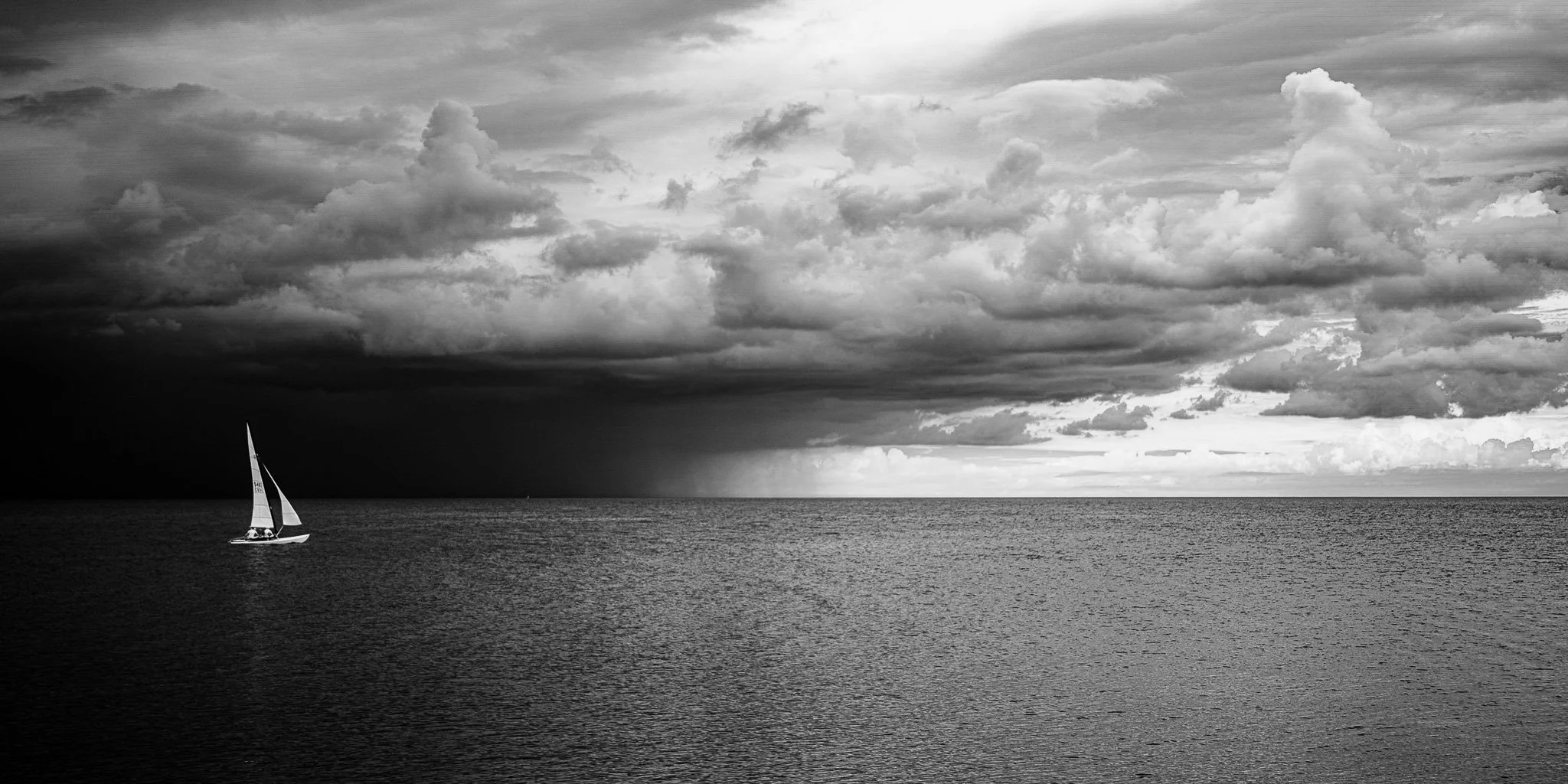
Sailing Beyond the Storm's Embrace
There's a sailboat, small and pale against a sky that's clearly been through something. The storm has already rolled through by the time the shutter opens — you can see it retreating on the horizon, still heavy, still dark at the edges, but past. And there, right in the space between what just happened and open water ahead, one small boat keeps moving.
I didn't set out to photograph relief. But that's what this image feels like to me now — not the storm itself, and not some easy resolution where the sky clears completely. Just that narrow, honest moment after the worst of it has passed, when you're still close enough to feel its weight but far enough to keep sailing anyway. Sailing Beyond the Storm's Embrace isn't about escaping the storm. It's about what it looks like to still be moving once it's behind you.
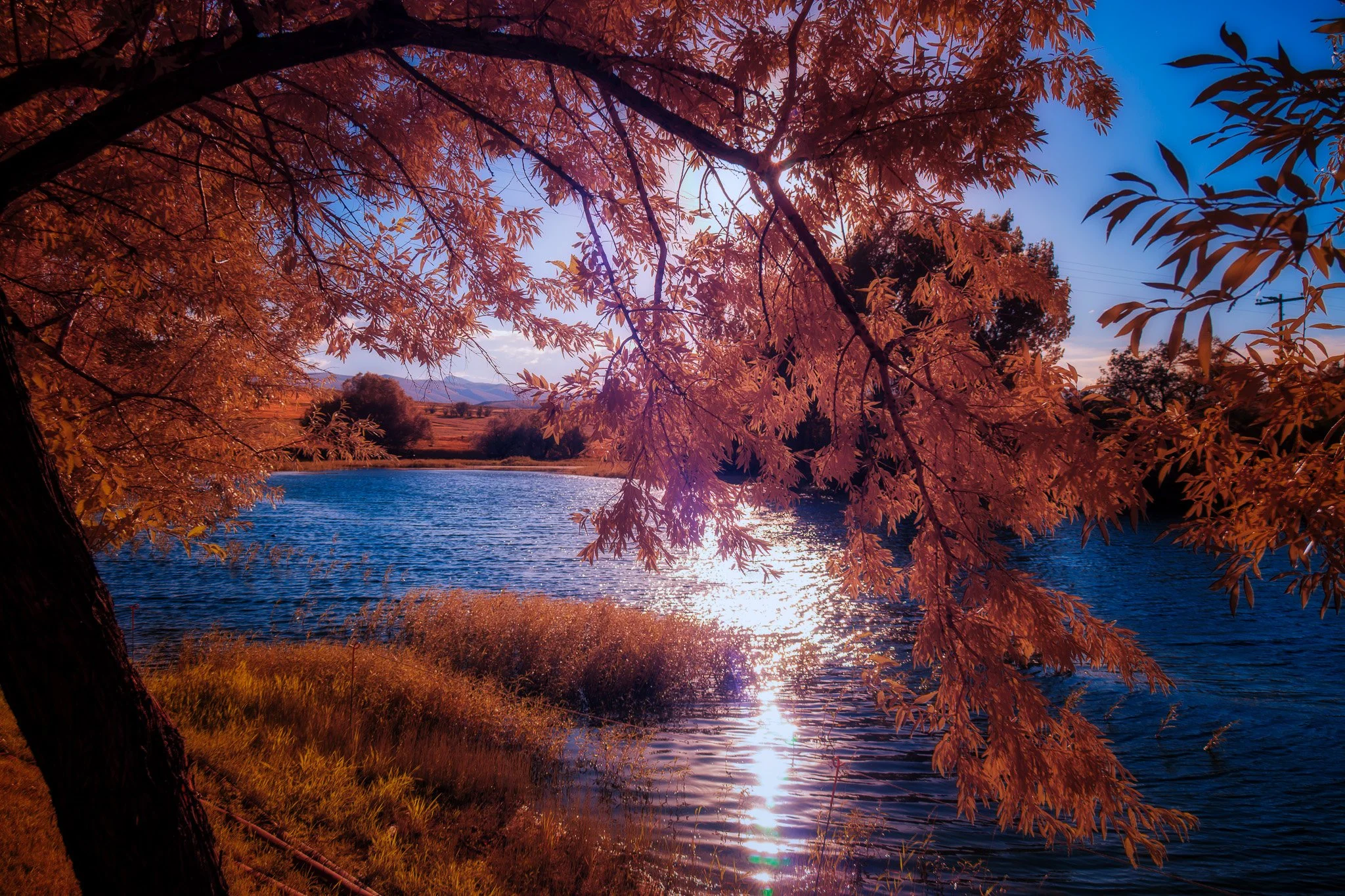
In infrared, the world stops behaving the way you expect. Foliage that should be green turns violet, or crimson, or gold. Skies shift into tones no eye has ever actually seen unaided. The "rules" of what a landscape is supposed to look like simply stop applying — and in that space, I found room to make images that felt less like documentation and more like translation. Not a translation of the scene in front of me, but of whatever was happening in me at the time I pressed the shutter.
That's also, I think, why so much of my work leans dark. Moody. Heavy skies, deep shadow, high contrast — what I sometimes call a "contrasty gut punch," even when it's subtle enough that most people wouldn't consciously notice it. I'm not chasing pretty. I'm chasing something closer to true. If you looked at a stretch of my darker black-and-white infrared work side by side, you'd probably notice a common thread: images that could be read as delicate, or as something closer to loss. Two leaves pressed together on wet asphalt, fragile, almost like they're holding onto each other. That's not accidental. That's how a lot of this feels from the inside, some days.
I don't think that makes the work sad. I think it makes it honest. And I think there's something worth saying here for anyone reading this who isn't a photographer at all, who just happens to be carrying something heavy of their own: you don't need a therapist's couch to process what's inside you. Sometimes a camera, a quiet trail, and a few hours of nobody needing anything from you is enough to let some of it out. Creative work — any creative work, not just photography — can be a legitimate outlet for what's hard to say directly. It doesn't have to look like "healing" from the outside to actually be doing something real on the inside.
That's the honest answer to "why infrared." Not the wavelength. The escape hatch it gave me — and, eventually, the language it gave me for talking about things I didn't have words for otherwise.
Copper Dreams at Lander Lake