
Fallingwater: Where Architecture Enters the Dream
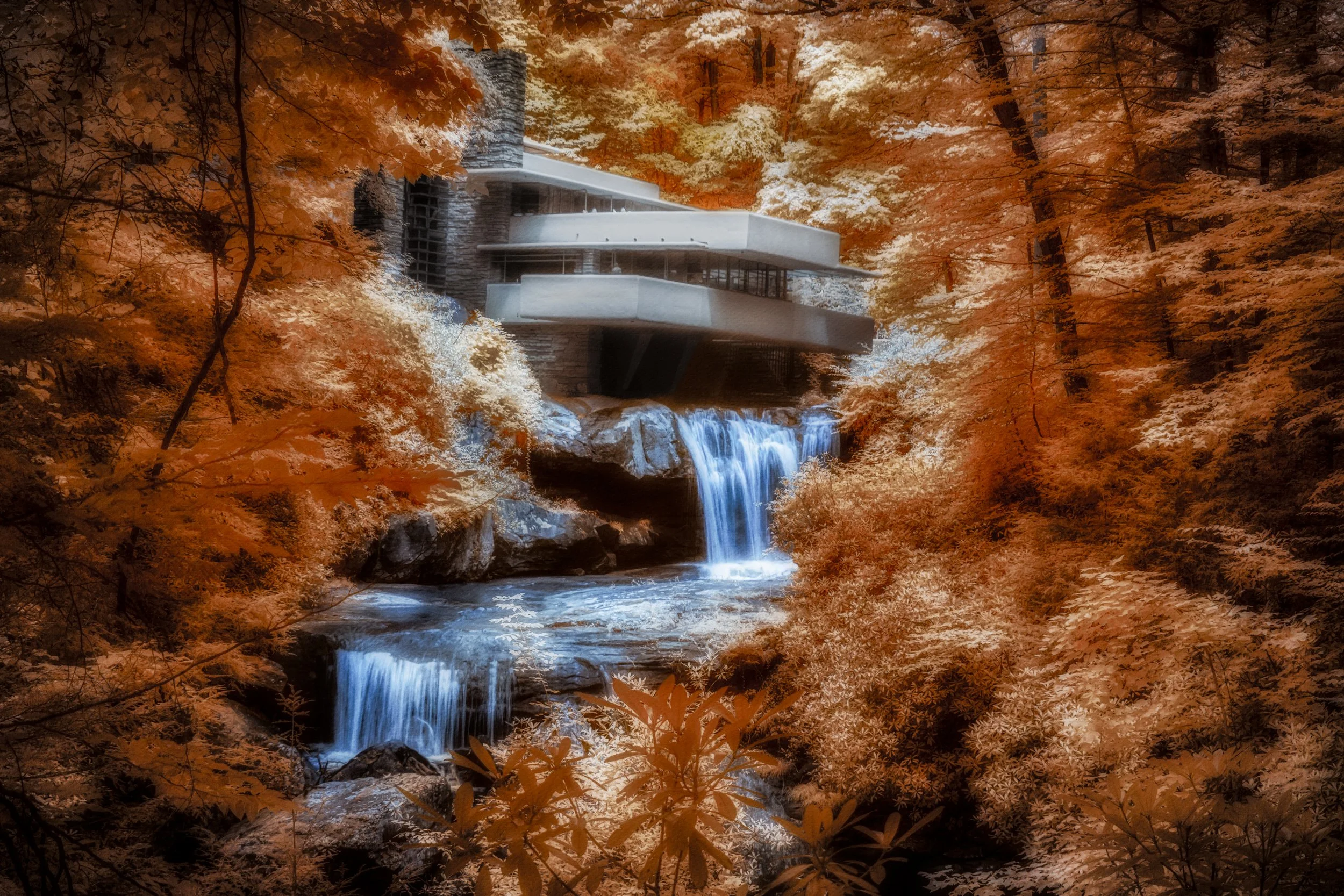
Fallingwater revealed through warm infrared tones, framed by the surrounding forest.
Some places are so familiar through photographs that arriving in person feels almost like stepping into a memory. Fallingwater was one of those places for me.
The week before our visit, we had toured Kentuck Knob, giving us an introduction to Frank Lloyd Wright’s ideas and his relationship with the surrounding landscape. Both homes were fascinating in their design, but Fallingwater still held surprises.
From the outside, the house appeared larger than it felt within. It was also tucked more deeply into the hillside than I had imagined. Inside, the scale seemed to shift continually. Some rooms felt massive and open, while others were unexpectedly small. The low ceilings made their presence known as well—I brushed my head in more than a few places and found myself wishing for another inch or two.
Yet those close, compressed spaces seemed to direct attention outward. The terraces reached into the forest, while the house extended over the waterfalls below. One of the details that stayed with me most was the stairway descending from inside the house toward the water. It made the connection between the home and the landscape feel immediate and physical.
Fallingwater did not simply offer a view of nature. It seemed to enter into it.
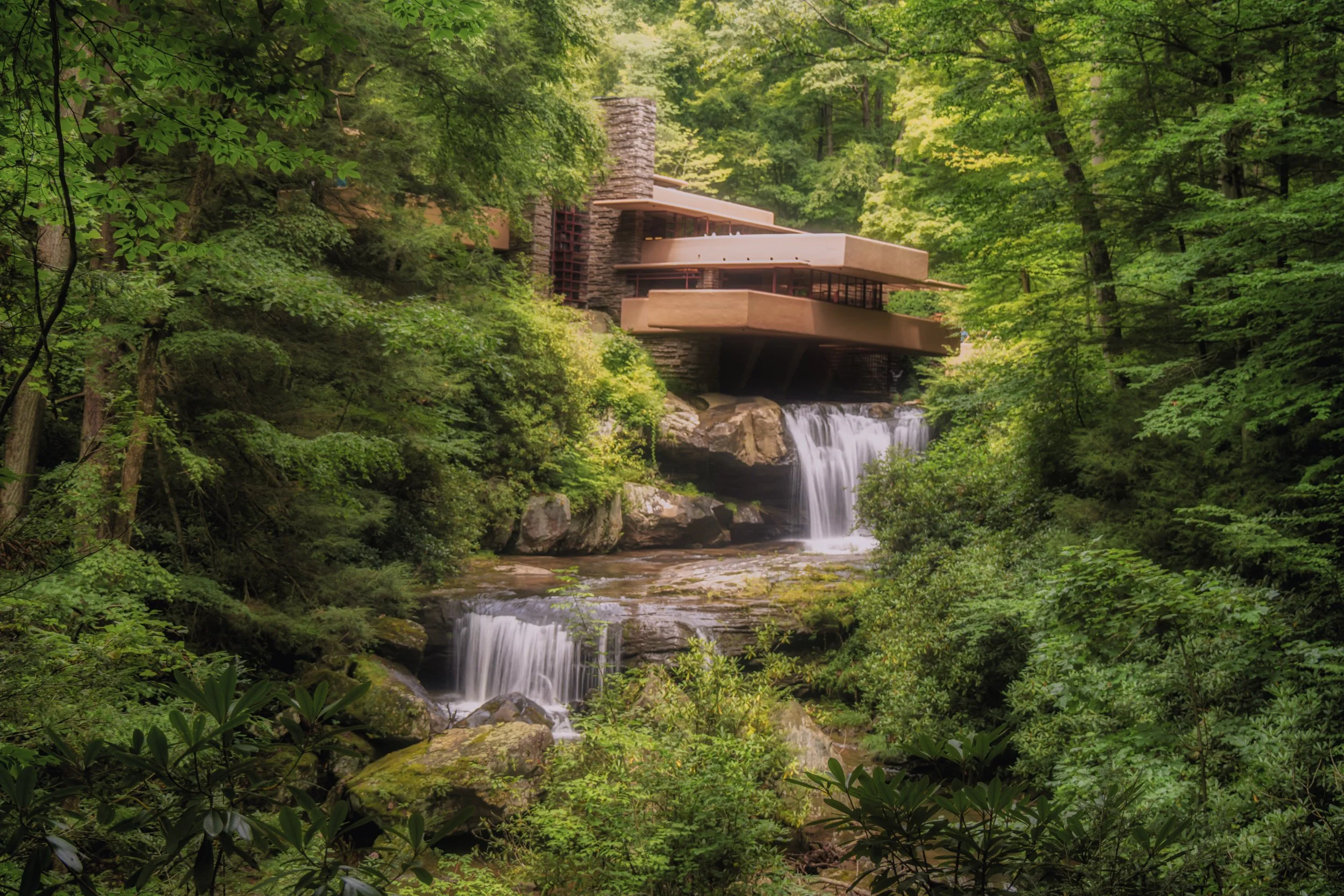
Fallingwater in visible light, settling quietly into the deep greens of the landscape.
Seeing Fallingwater Through Infrared
I made one photograph in visible light, preserving the deep greens of the forest and the warm, natural tones of the house. In that image, Fallingwater settles quietly into its surroundings. The foliage partially embraces and conceals the structure, showing how naturally the home belongs to the hillside.
Infrared offered a different way of seeing.
The transformed foliage created a natural vignette around the house, drawing attention toward Wright’s strong horizontal lines and the waterfalls beneath them. By shifting the familiar colors of the forest, the structure became more noticeable without feeling separated from the landscape.
Instead, the trees seemed to open a passage toward it.
I explored several interpretations of the scene. The purple version carries the most dreamlike atmosphere, and I remain deeply drawn to it. The black-and-white image strips the scene down to structure, light, and form.
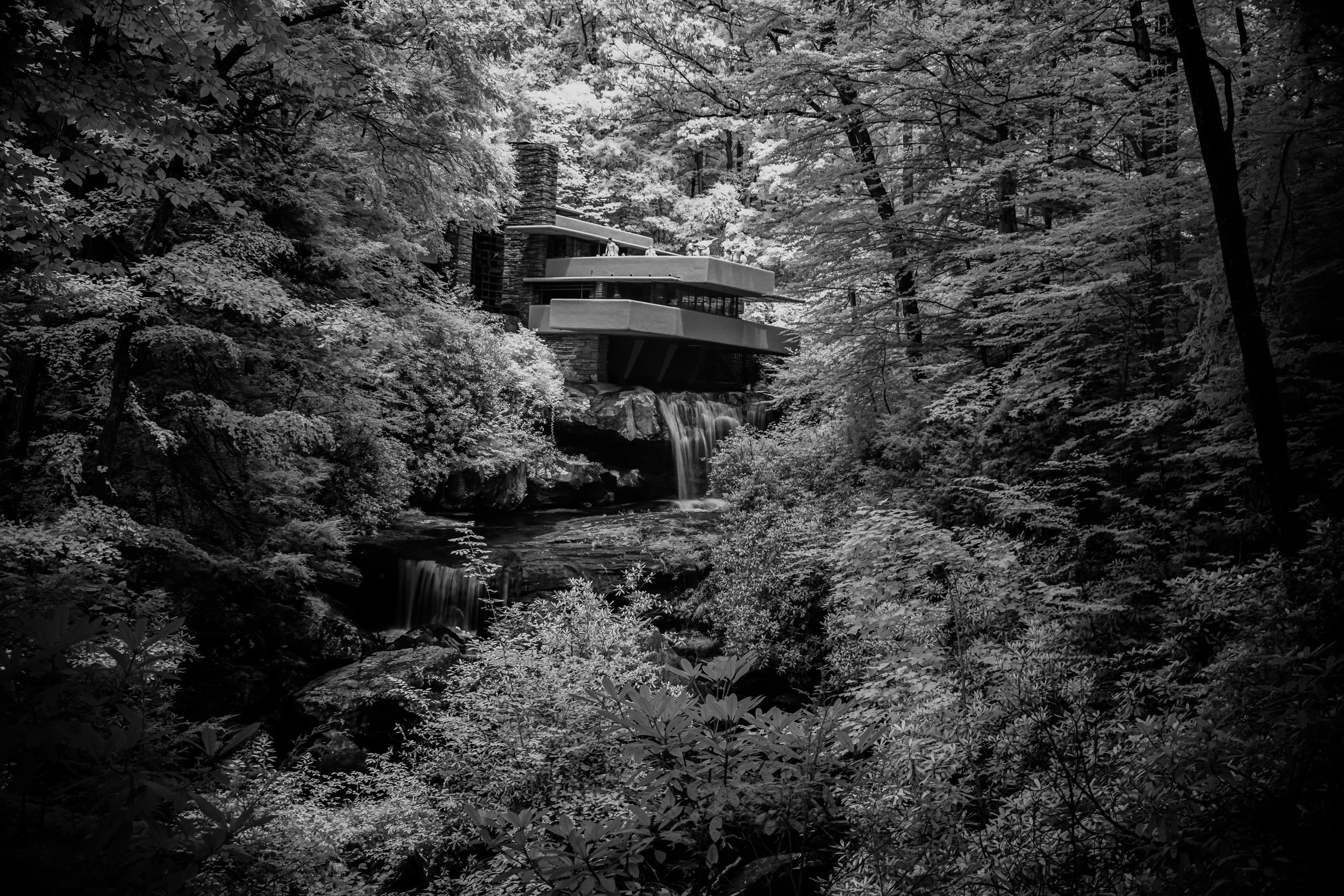
In black and white, the scene becomes a study of structure, light, and form.
But the copper-toned interpretation feels closest to what I wanted the photograph to express.
Its warm foliage forms a natural vignette, gently guiding the eye through the forest and toward the house. Fallingwater becomes the destination within the frame—not placed apart from nature, but slowly revealed by it.
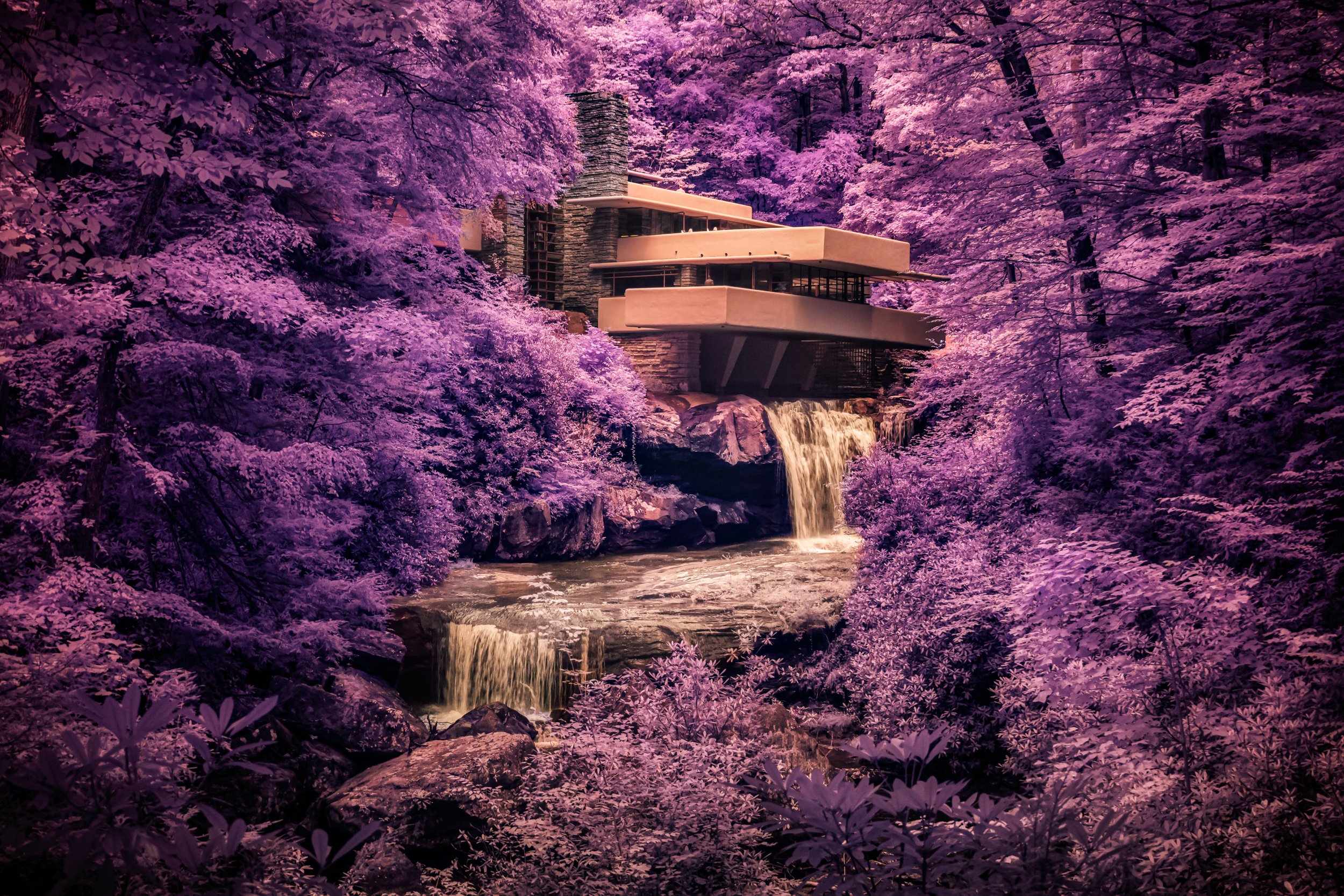
A dreamlike infrared interpretation, where the forest becomes a veil of violet light.
Becoming Part of the Landscape
Visiting Fallingwater and Kentuck Knob did not change how I think about architecture and nature. Instead, it reinforced something I have long felt.
I love when a home works directly with the landscape—when it seems to grow from the land and become one with it. Fallingwater embodies that idea more completely than almost any building I have experienced. Stone, water, forest, and architecture do not feel like separate elements. They belong to one another.
Perhaps that is why infrared felt like the right way to interpret the scene. Infrared photography transforms what appears familiar, but it can also reveal relationships that were already there.
At Fallingwater, it helped me see the house not simply as a remarkable structure above a waterfall, but as part of a larger living landscape—a place where architecture enters the dream.
This is a personal photographic reflection on my visit to Fallingwater. These photographs are presented editorially and are not offered for sale.
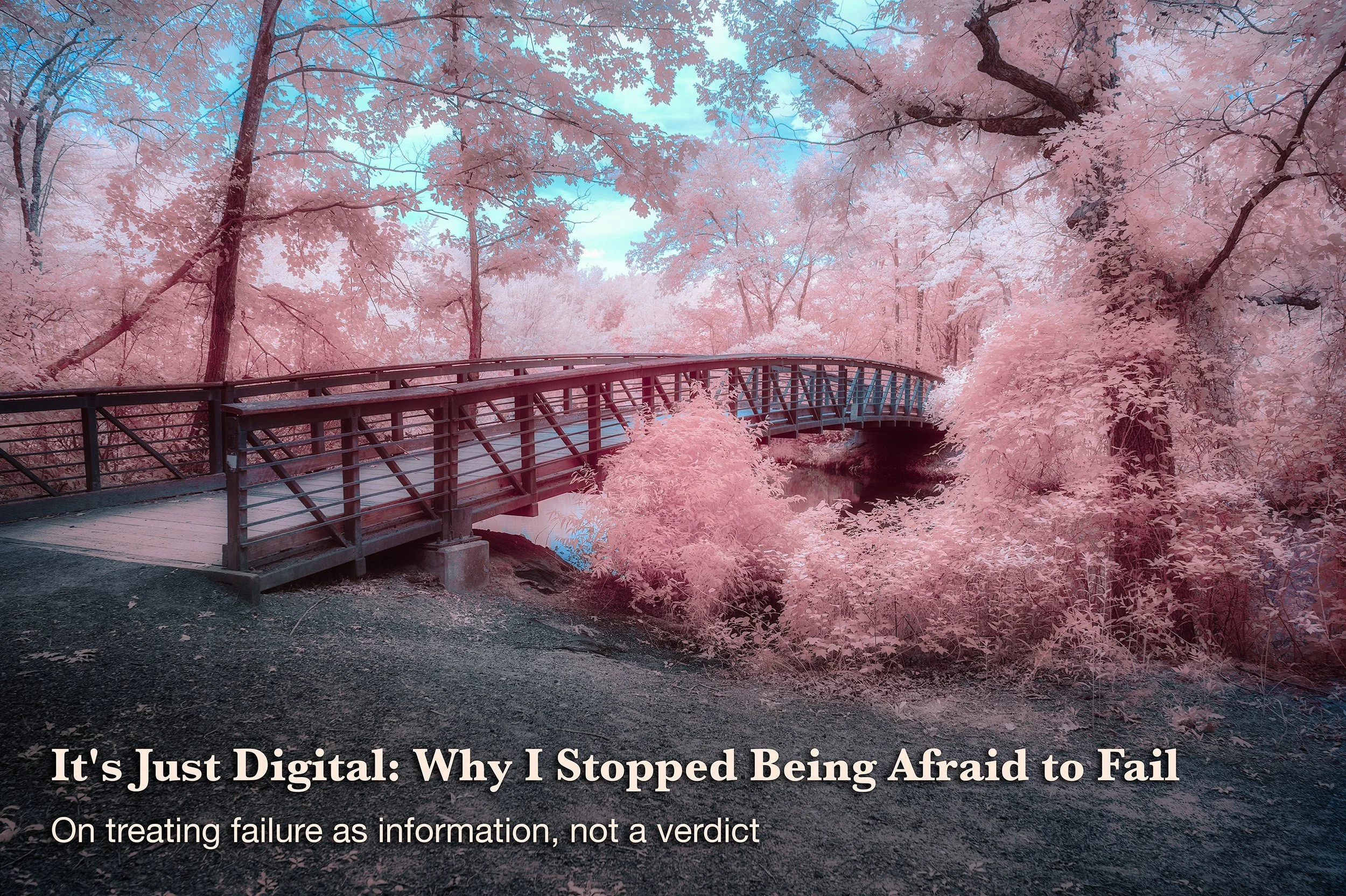
The same scene can render completely differently depending on which wavelength you shoot it in, and how much infrared light is actually bouncing off what's in front of you — which you can't always predict just by looking. So when I'm out shooting a scene I really care about, I don't shoot it once. I shoot it several times, often across several different wavelengths, including 850nm for that deep, otherworldly contrast.